


Democratic News
Featured Stories
News Feed
State Rep. Greta Johnson (D-Akron) today applauded the House’s passage of legislation to extend the statute of limitations for rape, while saying the legislators could still do more to bring justice to victims of rape and sexual battery.
House Bill 6 will extend the statute of limitations for rape from 20 to 25 years for all cases. It will also extend the statute another five years for cases in which there is a DNA match. Today Rep. Johnson, a former assistant county prosecutor, spoke on the House floor about ways in which the bill could be improved, such as by eliminating the statute of limitations for rape entirely.
“This bill is a positive step forward, but removing the statute of limitations would go even further in helping victims. Having the courage and ability to speak out against such an atrocious act as rape should not be limited by a legislative timeline,” said Rep. Johnson. “I believe that we can and should eliminate the statute of limitations for rape in its entirety.”
State Rep. Kathleen Clyde (D-Kent) today announced the formal introduction of House Bill 181, the Registration Modernization Act, which will modernize voter registration in Ohio and potentially add over 1 million people to the voting rolls. The bill was referred to the House Government Accountability and Oversight Committee of which Rep. Clyde is the ranking minority member.
“I am proud to offer HB 181, the Registration Modernization Act, to make the first step to the ballot box much easier for all Ohioans,” said Rep. Clyde. “There is a wide gap between the haves and have-nots in this country and voting access should not fall into that gap. We can move toward greater equality and a healthier democracy by welcoming and empowering every Ohioan to vote.”
The Registration Modernization Act will do the following:
- Automatically register to vote all Ohioans with a drivers’ license or state ID.
- Automatically register to vote all Ohioans who interact with Jobs and Family Services offices and other agencies designated by the federal Motor Voter law.
- Automatically register to vote all graduating Ohio high school students who are eligible to vote.
- Allow every person 21 days to opt out of voter registration in person or by mail.
- Provide online voter registration for all eligible Ohioans, not just those with a photo ID.
- Potentially add over 1 million eligible Ohioans to the voting rolls and update thousands more.
- &nbs
The Ohio House Education Committee today favorably passed Rep. Denise Driehaus’ (D-Cincinnati) bipartisan legislation, House Bill 70, unanimously. Based on Cincinnati’s Community Learning Centers (CLC), the model would allow any Ohio school to work with parents and community members to provide supplemental services for students such as on-site healthcare, dental care, tutoring, recreation and mental health services.
“I am thrilled by the bipartisan support for this legislation,” said Rep. Driehaus. “This was an important step in the process of allowing our schools to transform their buildings beyond the traditional place of providing only education. Many other states have come to visit Cincinnati’s model and now all of Ohio will have the opportunity to be on the forefront of twenty-first century education.”
HB 70 brings families, residents, students, educators and business leaders together to review the strengths and needs of their individual communities to decide how best to support students and their families. Together, the group decides which services are important for children in the neighborhood. Public-private partnerships are a key element to the CLCs. The partners use their own dollars to provide services so that no additional education funding is necessary.
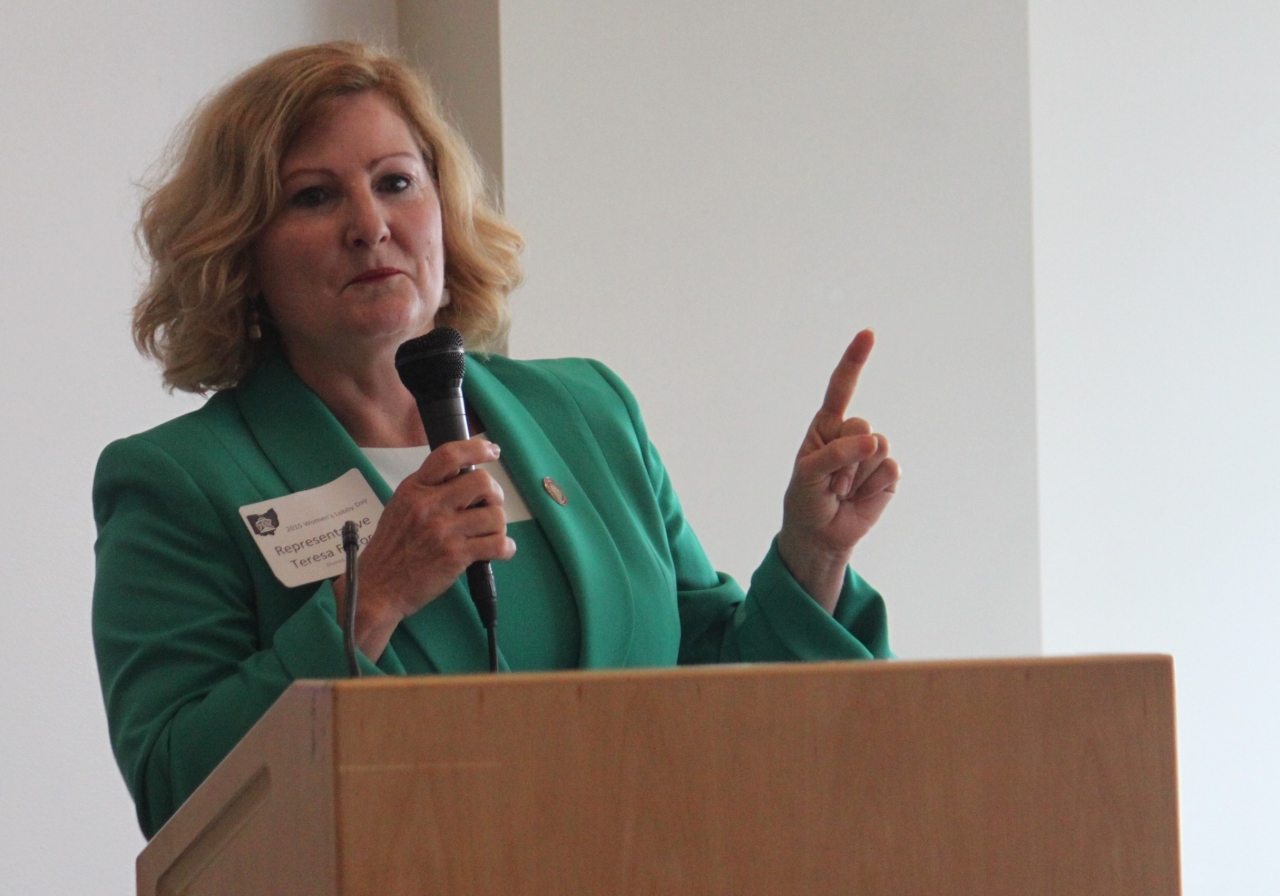
Ranking Democratic member on the House Education Committee, State Rep. Teresa Fedor (D-Toledo) today issued the following statement in response to reported allegations that an online charter school, Ohio Virtual Academy (OHVA), has been collecting taxpayer money for hundreds of students who should have been withdrawn for truancy many months ago:
“The detailed information my office received demands a thorough investigation. OHVA has a long history of poor academic performance, and now we are seeing a pattern of poor fiscal performance. We must put in place the reforms needed to ensure it does not happen again– for Ohio’s taxpayers and for our children.”
Today, Fedor sent a letter to the House Education Committee detailing the attendance rigging allegations.
Ohio Gov. John Kasich signed House Bill 47 today, which was introduced by Reps. Denise Driehaus and Lou Blessing III. The law will allow certain cities to create Outdoor Refreshment Districts, where the public can enjoy an alcoholic beverage outside, within a specified area of an Ohio community.
"This law will help create economic opportunity for our communities while growing local Ohio businesses. These districts will become destination spots which will create excitement and provide a critical mass of customers for the restaurants, bars and shops in the district and nearby,” Driehaus said.
The new law will allow cities with a population of over 35,000 to apply for Outdoor Refreshment District areas within their cities. Specifically, it will allow cities with a population between 35,000 and 50,000 to create one Outdoor Refreshment District, while cities with over 50,000 will have the opportunity to create two. After two years, cities with populations of less than 35,000 will be permitted to create a district if they meet certain requirements.
Ohio Legislative Black Caucus President (OLBC) and State Rep. Alicia Reece (D-Cincinnati) released the following statement after joining Gov. John Kasich and her colleagues on the state’s 24-member Community-Police Relations Task Force today to present their recommendations on strengthening Ohio’s justice system:
“I am proud of our recommendations we put forth and believe they are the first step in restoring faith and trust in our justice system. I am also pleased that the governor used our work in Cincinnati as a model for a collaborative approach in implementing these recommendations at a statewide level.
“We need to hold this effort and public officials in our state accountable to ensure that the first step we took today is not the last, but the beginning of real and lasting reform. I am hopeful the legislature takes our findings seriously as well and works with us on justice reform bills to give our work the permanence and funding needed to make our communities open for people of all backgrounds to lead happy and productive lives free from fear.
“In addition to reforms in our justice system, we must also take seriously the need for economic reforms that level the playing field for all people—regardless of race—to have a fair shot at prosperity in our state. I look forward to seeing a report on our progress before summer begins.”
While serving as city councilwoman, Rep. Reece played an integral role in brokering Cincinnati’s 2002 police-community relations collaborative agreement following the city’s 2001 race riots sparked by the police shooting of 19-year-old Timothy Thomas.
State Rep. Greta Johnson (D-Akron) today applauded the House Judiciary panel’s passage of House Bill 123, the lawmaker’s bipartisan bill to eliminate some costly pre-sentence investigation reports (PSI) in an effort to clean up Ohio’s judicial system.
“This legislation benefits taxpayers and connects offenders with immediate access to the treatment and services they so desperately need,” said Rep. Johnson. “We have a real shot at saving hundreds of dollars per case in administrative costs while increasing community safety and overall efficiency of the judicial system. I am pleased that the Ohio Supreme Court and the House of Representatives recognize this as an unnecessary burden on local communities and their dwindling funds.”
At a ribbon-cutting and dedication ceremony this afternoon, State Rep. Teresa Fedor (D-Toledo) and several leaders of the community celebrated the opening of a Human Trafficking and Social Justice Institute within the College of Social Justice and Human Service at the University of Toledo.
“I’m honored to be part of the formal dedication of the University of Toledo’s Human Trafficking and Social Justice Institute,” said Rep. Fedor. “UT’s Human Trafficking Institute will build on the landmark research and prestigious work of UT Professor Dr. Celia Williamson, and it will have a profound impact, not just locally, but worldwide. As the only one of its kind, the work of this institute will go a long way toward rescuing and restoring victims, as well as aiding in the prosecution of the criminals.”
Wednesday, State Rep. Emilia Sykes (D-Akron) and Ohio House Democratic Caucus members stood in opposition to the state’s two-year budget proposal, House Bill 64. Democratic legislators said the bill failed to lay out a real plan for the future of the state and instead advanced partisan attacks on working Ohioans and policies that rig the tax system to help the richest one-percent and special interests.
Democrats offered several alternative proposals* that would have put more money in the pockets of middle class Ohioans, stopped attacks on working Ohioans, ensured equal pay for women, reduced the state’s sales tax and maintained access to healthcare for pregnant working mothers and women needing cancer treatment. The Democratic proposals were shot down along party lines.
“I am very disappointed that the Ohio House has decided against working families by passing this budget,” said Rep. Sykes. “I'm especially disappointed that an amendment I offered that would reduce Ohio's abysmal infant mortality rate was tabled. People say, ‘Show me your budget and I'll show you your priorities.’ The Ohio House showed us that working families, pregnant women, babies and an educated work force are not our priorities."
Today, State Rep. and highest ranking Democrat on the state budget panel Denise Driehaus (D-Cincinnati) stood in opposition to the state’s two-year, $131.6 billion budget proposal, House Bill 64. Democratic members said a bill of that magnitude should have been a strategic and targeted blueprint to grow the state’s economy for the future, but instead became a vehicle for tax cuts that favor the richest one-percent and last-minute attacks on working Ohioans.
“This budget doesn’t work to provide a real plan for the future of Ohio,” said Driehaus. “Not only does this budget fail to lay out a plan for growing and strengthening our middle class and Ohio’s economy for the future, it attacks working and middle class Ohioans.”
- Page 1
- Page 2
- Page 3
- Page 4
- Page 5
- Page 6
- Page 7
- Page 8
- Page 9
- Page 10
- Page 11
- Page 12
- Page 13
- Page 14
- Page 15
- Page 16
- Page 17
- Page 18
- Page 19
- Page 20
- Page 21
- Page 22
- Page 23
- Page 24
- Page 25
- Page 26
- Page 27
- Page 28
- Page 29
- Page 30
- Page 31
- Page 32
- Page 33
- Page 34
- Page 35
- Page 36
- Page 37
- Page 38
- Page 39
- Page 40
- Page 41
- Page 42
- Page 43
- Page 44
- Page 45
- Page 46
- Page 47
- Page 48
- Page 49
- Page 50
- Page 51
- Page 52
- Page 53
- Page 54
- Page 55
- Page 56
- Page 57
- Page 58
- Page 59
- Page 60
- Page 61
- Page 62
- Page 63
- Page 64
- Page 65
- Page 66
- Page 67
- Page 68
- Page 69
- Page 70
- Page 71
- Page 72
- Page 73
- Page 74
- Page 75
- Page 76
- Page 77
- Page 78
- Page 79
- Page 80
- Page 81
- Page 82
- Page 83
- Page 84
- Page 85
- Page 86
- Page 87
- Page 88
- Page 89
- Page 90
- Page 91
- Page 92
- Page 93
- Page 94
- Page 95
- Page 96
- Page 97
- Page 98
- Page 99
- Page 100
- Page 101
- Page 102
- Page 103
- Page 104
- Page 105
- Page 106
- Page 107
- Page 108
- Page 109
- Page 110
- Page 111
- Page 112
- Page 113
- Page 114
- Page 115
- Page 116
- Page 117
- Page 118
- Page 119
- Page 120
- Page 121
- Page 122
- Page 123
- Page 124
- Page 125
- Page 126
- Page 127
- Page 128
- Page 129
- Page 130
- Page 131
- Page 132
- Page 133
- Page 134
- Page 135
- Page 136
- Page 137
- Page 138
- Page 139
- Page 140
- Page 141
- Page 142
- Page 143
- Page 144
- Page 145
- Page 146
- Page 147
- Page 148
- Page 149
- Page 150
- Page 151
- Page 152
- Page 153
- Page 154
- Page 155
- Page 156
- Page 157
- Page 158
- Page 159
- Page 160
- Page 161
- Page 162
- Page 163
- Page 164
- Page 165
- Page 166
- Page 167
- Page 168
- Page 169
- Page 170
- Page 171
- Page 172
- Page 173
- Page 174
- Page 175
- Page 176
- Page 177
- Page 178
- Page 179
- Page 180
- Page 181
- Page 182
- Page 183
- Page 184
- Page 185
- Page 186
- Page 187
- Page 188
- Page 189
- Page 190
- Page 191
- Page 192
- Page 193
- Page 194
- Page 195
- Page 196
- Page 197
- Page 198
- Page 199
- Page 200
- Page 201
- Page 202
- Page 203
- Page 204